
Versus Arts: Comparative Learning Approaches: A Complete Guide

Megan Coleman · on 02 August 2026 · 8 min read · Last reviewed 02 August 2026
Arts and entertainment districts
Arts and entertainment districts, often referred to as versus arts areas, are designated zones in cities and towns that promote cultural, artistic, and economic growth by clustering artistic venues, studios, and businesses. Arts and entertainment districts are designated areas in cities and towns that foster cultural, artistic, and economic development through a concentration of artistic venues, studios, and businesses.
These districts often receive special zoning, tax incentives, and public funding to support artistic endeavors and attract tourists and residents alike.
- Arts and entertainment districts can be found in major cities like New York, Los Angeles, and Chicago, as well as in smaller towns and urban areas.
- According to the National Association of Cities, these districts contribute significantly to local economies by generating tax revenue and creating jobs.
- Successful districts often feature a mix of theaters, galleries, restaurants, and retail shops, creating a vibrant cultural hub.
- The designation of an arts district can lead to increased property values, revitalization of historic buildings, and enhanced community engagement.
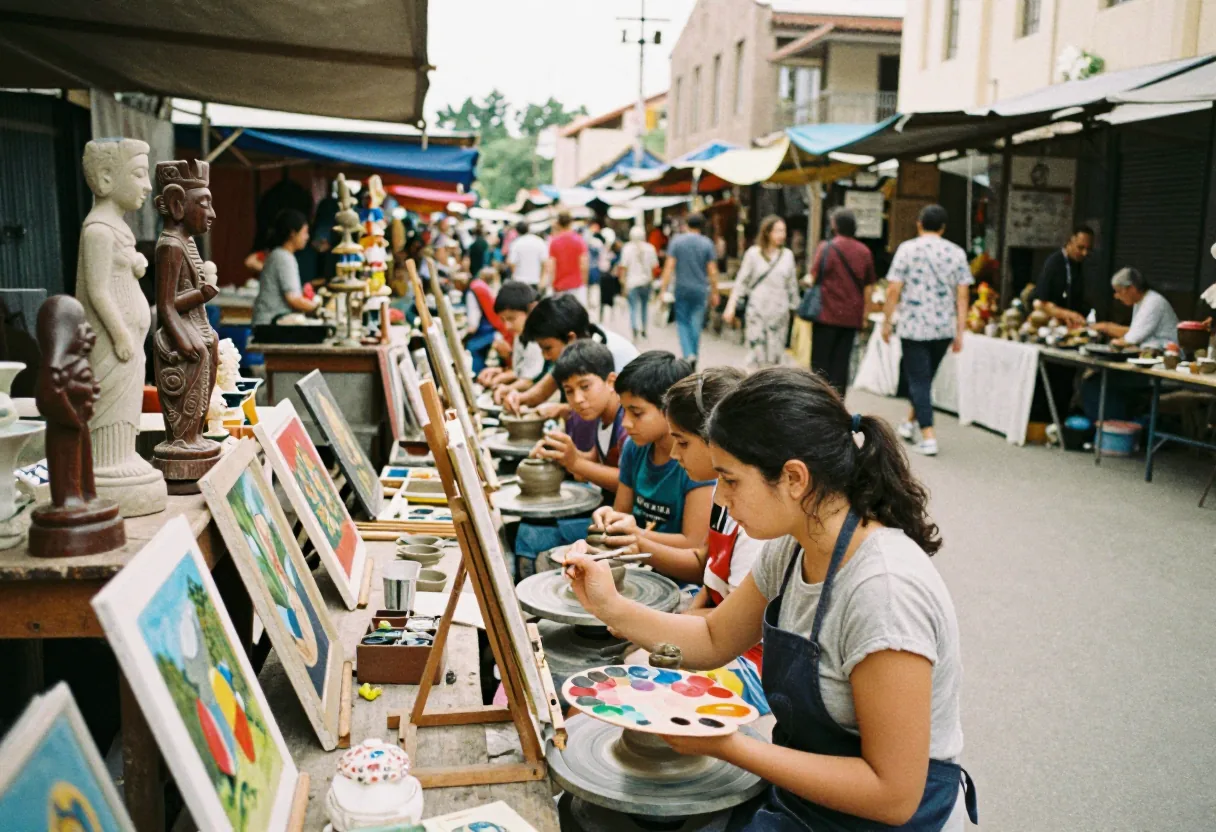
Types of arts and entertainment districts
Arts and entertainment districts come in various forms, each catering to different artistic and cultural needs. The type of district often depends on the local community’s interests and the available resources.
Recognizing various kinds can assist in determining which areas may provide the finest experiences or chances for your creative endeavors.
- Theater districts: Focus on performing arts, including theaters, concert halls, and live performance venues. Examples include the Broadway district in New York City and the Theater District in Chicago.
- Gallery districts: Center around visual arts, featuring galleries, museums, and artist studios. The Chelsea Gallery District in New York City is a prime example.
- Music districts: Emphasize music venues, recording studios, and music education centers. Austin, Texas, is renowned for its live music districts.
- Multidisciplinary districts: Combine various forms of art, including theaters, galleries, music venues, and restaurants. The Arts District in Los Angeles is a notable example.
The arts and entertainment network
The arts and entertainment network is a collaborative ecosystem that includes artists, educators, institutions, and audiences, all working together to promote and sustain artistic activities.
This network fosters innovation, provides resources, and creates opportunities for artists to showcase their work and for audiences to engage with diverse forms of art.
Arts and entertainment artists
Creators in the arts and entertainment industry are the driving force behind the diverse forms of art that engage and inspire audiences. These artists include painters, sculptors, musicians, actors, dancers, writers, and digital artists.
Every artist offers a distinct viewpoint and expertise, enriching the arts and entertainment scene.
Arts and entertainment news
Arts and entertainment news updates audiences on recent developments, trends, and events in art. This features exhibitions, performances, awards, and artist profiles.
Staying updated with arts news helps enthusiasts discover new artists, understand emerging trends, and engage more deeply with the arts community.
Arts and entertainment management
Managing arts and entertainment requires overseeing organizations, events, and projects. This field ensures that artistic endeavors are well-organized, financially sustainable, and accessible to the public.
Effective management is crucial for the success of arts initiatives, from small community projects to large-scale productions.
| Aspect | Visual Arts | Performing Arts | Digital Arts |
|---|---|---|---|
| Primary Tools | Brushes, paints, sculptures, digital software | Voice, body, musical instruments, stage | Computers, graphic tablets, animation software |
| Learning Outcomes | Creativity, fine motor skills, color theory | Confidence, teamwork, expression | Technical skills, digital literacy, innovation |
| Educational Value | Develops patience and attention to detail | Enhances communication and collaboration | Prepares students for modern career paths |
Visual arts
Visual arts are ideal for those who prefer a hands-on, creative approach to learning. This discipline includes painting, drawing, sculpture, and photography, among others. Visual arts classes often focus on developing technical skills, understanding composition, and looking at different mediums. For example, a course on painting might include lessons on color theory, brush techniques, and canvas preparation. According to the National Art Education Association, visual arts education enhances critical thinking and problem-solving skills. However, the cost of materials and access to quality instruction can vary significantly, making it an investment for both beginners and advanced learners.
Performing arts
Performing arts are best suited for individuals who enjoy expressing themselves through movement, voice, and stage presence. This includes theater, dance, music, and other performing disciplines. Performing arts programs often emphasize collaboration, performance techniques, and audience engagement. For instance, a theater class might involve script analysis, character development, and stagecraft. The performing arts can boost confidence and communication skills, but they require consistent practice and often involve performance anxiety.
Digital arts
Digital arts appeal to individuals keen on using technology for artistic creation. It includes graphic design, animation, digital photography, and video production. Courses in this field usually emphasize software skills, digital storytelling, and multimedia production. For instance, a digital photography class may teach camera settings, editing software, and composition techniques. Digital arts hold significant value in a tech-focused society, but they demand access to specialized tools and software, which can be expensive.
How to choose
To choose the right versus arts approach, consider the following criteria:
- Interests and Passions: Identify which art forms you are most drawn to and enjoy.
- Learning Goals: Determine what skills and knowledge you hope to gain from your arts education.
- Resources and Budget: Assess the availability of materials, tools, and instruction within your budget.
- Career Aspirations: Consider how each art form aligns with your long-term career goals and opportunities.
| Criteria | Visual Arts | Performing Arts | Digital Arts |
|---|---|---|---|
| Skill Development | Technical proficiency, creativity | Expression, collaboration | Technical skills, digital literacy |
| Accessibility | Moderate (materials required) | High (minimal equipment needed) | Low (specialized software/hardware) |
| Career Paths | Artist, designer, illustrator | Actor, musician, dancer | Graphic designer, animator, videographer |
Arts and entertainment jobs
Creative industries offer a wide range of career opportunities for those passionate about arts and entertainment jobs. These jobs include roles such as artists, musicians, actors, directors, producers, curators, and arts administrators. Each role requires a unique set of skills and qualifications, but all contribute to the vibrant and dynamic world of arts and entertainment. According to the Bureau of Labor Statistics, employment in arts and entertainment is expected to grow, driven by increasing demand for cultural experiences and digital content.
| Job Title | Primary Responsibilities | Required Skills | Education Level |
|---|---|---|---|
| Graphic Designer | Create visual content to communicate messages | Creative thinking, software proficiency, design principles | Associate or Bachelor’s degree |
| Musician | Compose, perform, and record music | Instrumental proficiency, creativity, performance skills | Varies (formal education not always required) |
| Actor | Portray characters in theater, film, and television | Acting techniques, expression, collaboration | Varies (training programs, degrees, or experience) |
| Arts Administrator | Manage arts organizations and events | Leadership, budgeting, project management | Bachelor’s or Master’s degree |
Arts and entertainment crafts
Crafts, a part of arts and entertainment, encompass a wide range of traditional and contemporary handmade arts. These crafts include pottery, woodworking, textiles, jewelry making, and more. Crafts often blend artistic expression with practical skills, making them a unique and rewarding pursuit.
Engaging in crafts can be a therapeutic and creative outlet, allowing individuals to produce functional and decorative items. The craft community is vibrant and supportive, with many local and online resources available for learning and inspiration.
- Pottery: Involves creating ceramic objects using clay and kilns. It can range from functional items like dishes to decorative sculptures.
- Woodworking: Focuses on creating items from wood, such as furniture, carvings, and musical instruments. It requires precision and patience.
- Textiles: Includes activities like weaving, knitting, and sewing. Textile crafts produce items like clothing, blankets, and tapestries.
- Jewelry making: Encompasses creating wearable art pieces using metals, gemstones, and other materials. It combines design and technical skills.
Arts and entertainment centers
Dedicated spaces designed to promote and showcase artistic activities are arts and entertainment centers. These centers often serve as hubs for local artists, offering studios, performance spaces, classrooms, and galleries. They play a crucial role in fostering creativity and community engagement.
Arts and entertainment centers can be found in various settings, from urban areas to small towns, and they cater to diverse artistic disciplines. These centers often host events, workshops, and exhibitions, providing opportunities for artists to connect with audiences and fellow creators.
- Community arts centers: Focus on providing accessible arts education and cultural programs to the local community. Examples include the Chicago Cultural Center and the Brooklyn Arts Council.
- Performing arts centers: Primarily host live performances, such as theater, music, and dance. The John F. Kennedy Center for the Performing Arts in Washington, D.C., is a well-known example.
- Visual arts centers: Dedicated to showcasing and supporting visual artists through exhibitions, workshops, and residencies. The Walker Art Center in Minneapolis is a notable example.
- Multidisciplinary arts centers: Combine various forms of art, offering a comprehensive range of programs and activities. The Lincoln Center for the Performing Arts in New York City is a prime example.
| Center Type | Primary Focus | Key Features | Examples |
|---|---|---|---|
| Community Arts Centers | Accessible arts education | Classrooms, workshops, exhibitions | Chicago Cultural Center, Brooklyn Arts Council |
| Performing Arts Centers | Live performances | Theaters, concert halls, rehearsal spaces | John F. Kennedy Center, Lincoln Center |
| Visual Arts Centers | Visual art exhibitions | Galleries, artist studios, workshops | Walker Art Center |
| Multidisciplinary Arts Centers | Comprehensive arts programs | Performance spaces, galleries, classrooms | Lincoln Center |
Arts and entertainment industry
The arts and entertainment sector is a crucial part of the economy, covering diverse creative fields and commercial activities. It involves creating, sharing, and enjoying art, plus organizing and promoting cultural happenings. This sector greatly impacts economic growth, tourism, and community involvement. Knowing its layout and trends offers useful information for artists, teachers, and fans.
My first close look at the arts and entertainment industry happened during a trip to the Metropolitan Museum of Art. There, I witnessed how different art forms blend and influence each other, showcasing the industry’s intricacy and the need for cross-disciplinary teamwork.
Creating beautiful works, the arts and entertainment industry also builds connections, fuels innovation, and enhances communities. Knowing how the industry functions helps you navigate your artistic path and make a significant impact on art.
To get started in the arts and entertainment industry, consider enrolling in specialized courses or workshops offered by institutions like the School of the Art Institute of Chicago or the Julliard School. These programs provide comprehensive training and networking opportunities that can help you build a successful career in the arts.
Frequently asked questions
How does Versus Arts compare traditional and contemporary dance techniques?
Versus Arts contrasts traditional dance techniques, like those in ballet or classical Indian dance, with contemporary styles such as hip-hop or modern dance. For instance, it highlights the structured footwork of ballet versus the free-form movements in contemporary dance, showing how each style emphasizes different aspects of physical expression and cultural heritage.
What are the key differences in teaching methods between Versus Arts and traditional dance schools?
Versus Arts often uses a comparative approach, placing traditional and modern techniques side by side in lessons. Traditional schools might focus on mastering one style through repetition, while Versus Arts encourages students to analyze and blend techniques, fostering a deeper understanding of both historical context and innovative practices.
Can Versus Arts help dancers transition between different dance genres?
Yes, by exposing dancers to multiple genres and their underlying principles, Versus Arts equips them with the versatility to switch between styles. For example, a dancer learning both ballet and contemporary can apply the precision of ballet to the fluidity required in modern dance, making transitions smoother.
What unique opportunities does Versus Arts provide for dancers?
Versus Arts offers workshops and performances that combine diverse dance styles, giving dancers a platform to experiment and innovate. These opportunities are rare in traditional settings, where the focus is often on perfecting a single genre. This cross-genre training can lead to more creative and adaptive performers.